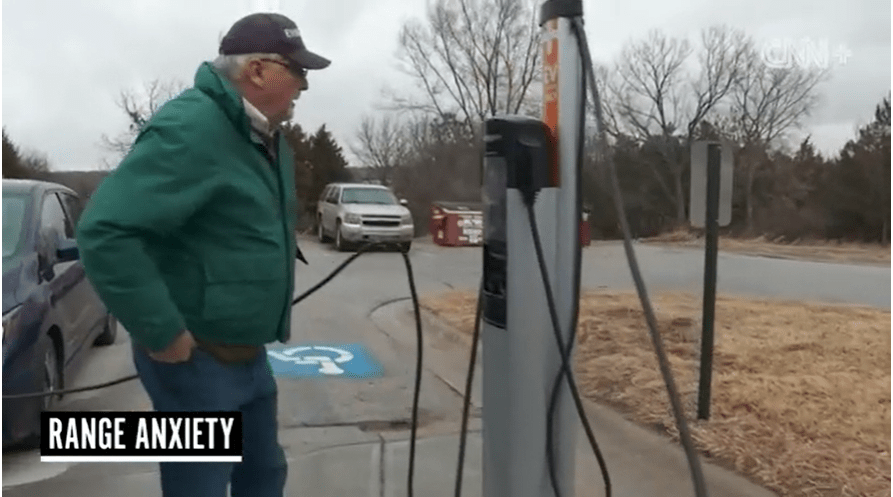
Range anxiety is real and it is hampering efforts to move drivers from internal combustion engines into electric vehicles. We point out some of the problems in the hope they will be addressed. We also cover what is working well.
Driving an electric vehicle beyond the vehicle’s range requires some planning. And even if you map out a meticulous plan, you’re subject to various range anxieties.
Range anxiety is the fear of driving an electric car and running out of power without being able to find a charging point on time to replenish the battery. Thus you fear being left stranded. You worry about where you can charge on long trips, how long charging takes, whether the charger will be available when you get there, whether the charger is working, whether it is producing enough kilowatts, and how much will it slow you down on these cross-country trips. Indeed, range anxiety is considered to be one of the major psychological barriers to large-scale public adoption of electric cars.
According to Wikipedia, the term “range anxiety” was first reported in the press on September 1, 1997, in the San Diego Business Journal by Richard Acello referring to worries of GM EV1 electric car drivers. On July 6, 2010, General Motors filed to trademark the term, stating it was for the purpose of “promoting public awareness of electric vehicle capabilities”. The Norwegian equivalent rekkeviddeangst was assigned second place in a list of Norwegian “words of the year” for 2013 by the Norwegian Language Council.
I have yet to run out of charge, but I have come close. Looking at the landscape and worrying about charging infrastructure when you’re riding with only 25 miles left in the battery has caused much anxiety. It is one thing that has caused me to ponder about with EV’s will be adopted widely in the face of this anxiety.
I’ve been driving an EV since 2012, starting with a Chevrolet Volt. The Volt had a range extender solution where an internal combustion engine switches on to recharge the battery before it is empty. There was no range anxiety with that vehicle. I went fully electric in 2021 with the Mustang Mach-e.
So following an anxiety-filled trip from Massachusetts to New Hampshire and back, I’ve decided to catalog the good and the bad about EV charging. You’ll read about the bad experiences, and I’ll share the good ones as well.
The bottom line is that we need robust charging infrastructure in place to convince people to make the switch from internal combustion engines to EV’s.
To get you started on the topic, check out these pieces from the news:
 Range Anxieties
Leave a comment