Electric vehicle (EV) charging needs along Massachusetts and New York highways will require interconnection to high-capacity transmission lines in the next decade, finds a first-in-the-nation study released on November 2022. The Electric Highways Study provides a blueprint for the strategic buildout of fast-charging sites along highway corridors to meet an upcoming surge in demand from the electrification of passenger vehicles and commercial trucks. The study forecasts the future of fast-charging along highway corridors in Massachusetts and New York, providing a first-of-its-kind blueprint for powering the EV transition in the U.S. Northeast to 2045.
EV adoption is expected to accelerate nationwide due to market forces and federal policy changes, including the Infrastructure Investment and Jobs Act of 2021 and the Inflation Reduction Act of 2022. At the state level, New York’s adoption of the Advanced Clean Cars II regulation and Massachusetts’ passage of “An Act Driving Clean Energy and Offshore Wind” will ban the sale of gas-only passenger vehicles by 2035.
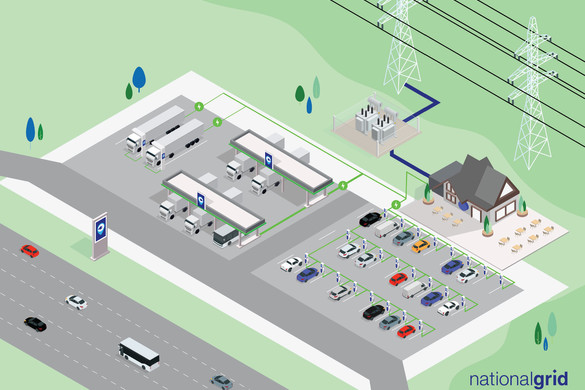
National Grid and leading transportation analytics organizations CALSTART, RMI, Geotab, and Stable Auto, conducted the analysis to provide new insight into the future of EV highway charging in New York and Massachusetts and to better understand the impact of this transition on the grid.
The Electric Highways Study can help utilities and policymakers make smarter decisions about electric grid interconnections and infrastructure, avoiding repeated upgrades and ensuring grid readiness does not hinder the clean energy transition.
The study examined current traffic patterns and expected charger use to forecast charging demand at 71 highway sites across New York and Massachusetts. The analysis included relevant electric vehicle sales goals and mandates in National Grid’s home states — considering scenarios where all light-duty vehicle sales are electric by 2035 and all medium-and heavy-duty vehicle (MHDV) sales are electric by 2045.
According to the findings, in 10 years more than a quarter of sites studied will require the same amount of power as an outdoor sports stadium to meet charging demand, with some requiring the same power as a small town within the next two decades.

Existing transmission lines, which often mirror highway routes, provide a ready-made solution if highway charging sites can “plug-in” to the high-voltage transmission grid. Strategically future-proofing high-traffic sites will allow states to accelerate cost-effective charging deployment.
To read the Electric Highways Study and learn more about the future of EV fast charging, visit nationalgrid.com/us/EVhighway
 Range Anxieties
Leave a comment