Despite the layoff news, Tesla’s Supercharger network is inarguably Tesla’s crown jewel. And more proof of that hit home when I was able to use the magic dock system that was recently installed at the Trillium Brewery in Canton.
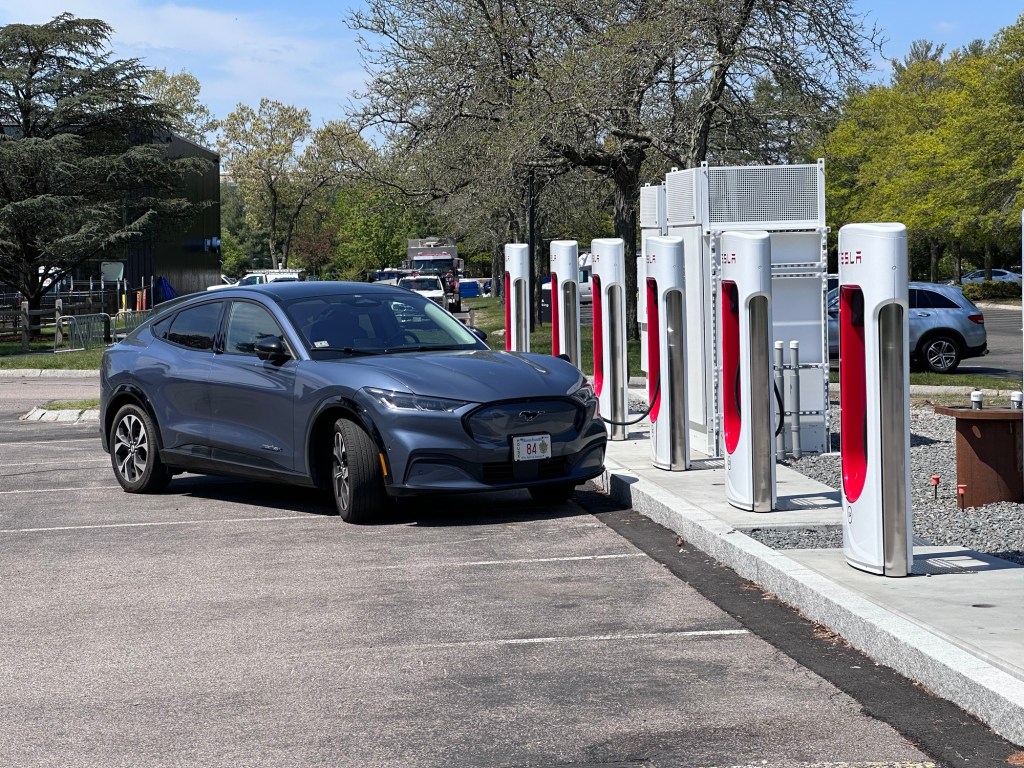
I pulled into the parking lot at Trillium, met up with Tesla’s Senior Policy Manager Zachary Kahn, and he introduced me to 20 brand new charging stations lined up and ready to roll. The Tesla app on my iPhone quickly located the chargers in the parking lot and with one press of a button, unit 3C was ready to pump around 100 kW of energy into my vehicle.
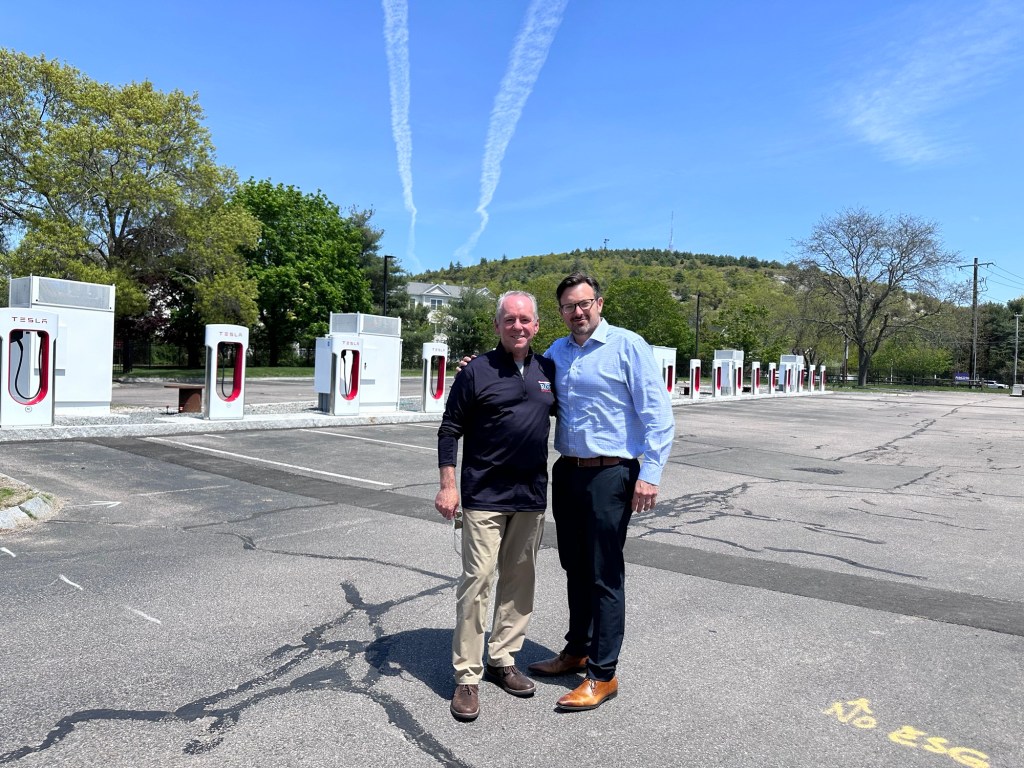
Tesla now has 25 charging sites in Massachusetts with approximately 250 chargers that will work with Ford vehicles like mine that have an adapter (mine hasn’t arrived yet) or with the magic dock. That’s incredible news for drivers who have been looking for more infrastructure options.
Tesla has built out more than 2,000 charging stations in the United States, with more than 25,000 plugs. More than that, the chargers invariably work, something that is often not true for other charging networks. The Tesla Supercharger network is so successful that, over the course of last year, virtually every other automaker that sells or plans to sell EVs in the US has announced it will drop the CCS1 connector for the J3400 standard, originally developed by Tesla.
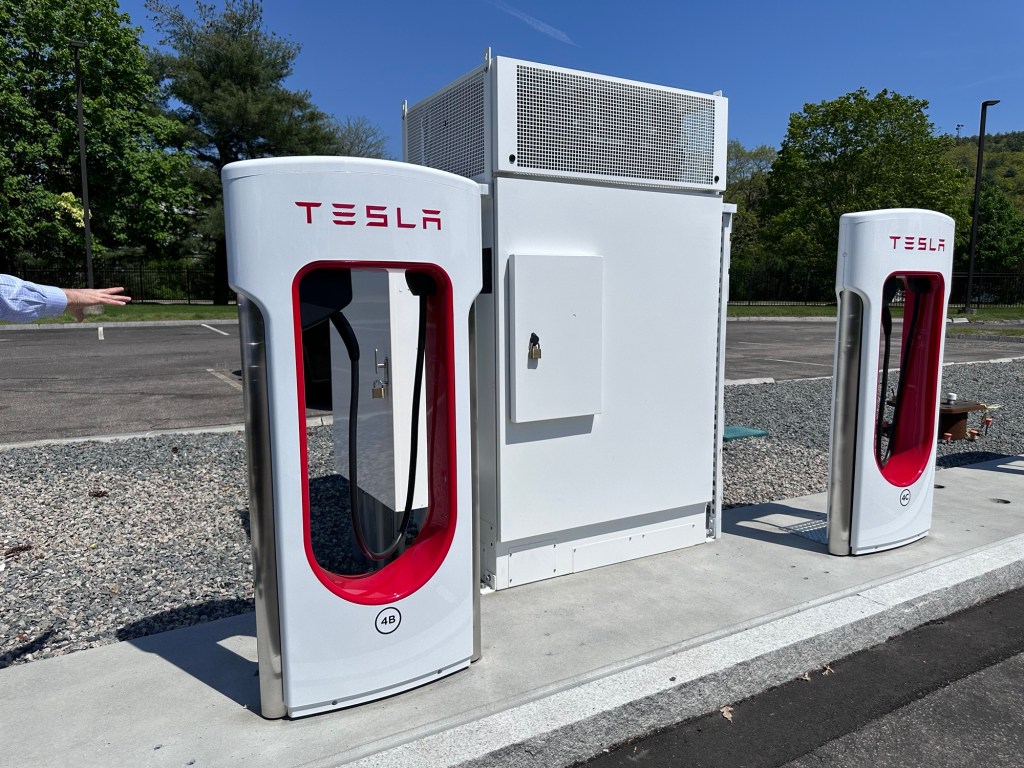
Last week, Musk announced that Tesla would spend more than $500 million building out more chargers. And to do that, Tesla will need to rehire a whole bunch of people. That’s good news for the industry and users.
We are still hoping the City of Boston will get on the bandwagon soon and get some fast chargers in place. It’s been disappointing to see that fast chargers have not yet been embraced by a City that boasts of a commitment to fighting climate change. Greenhouse gas (GHG) emissions from transportation account for about 28 percent of total U.S. greenhouse gas emissions, making it the largest contributor of U.S. GHG emissions. As such, the team at RangeAnxieties.com will keep a watchful eye on Boston’s progress on building a robust fast charging network.
 Range Anxieties
Leave a comment